Many students in the United States struggle to connect what they learn in classrooms with real-life situations. Traditional teaching methods, which focus mainly on lectures, memorization, and standardized testing, often fail to provide meaningful understanding or practical skills. As a result, students may feel disengaged, underprepared for the workforce, or unsure how to apply theoretical knowledge in real-world contexts.
Experiential learning offers a solution to this problem by allowing students to actively participate in their education. By doing so, they retain knowledge better, develop critical thinking, and gain confidence in their abilities.
 How Modern Teaching Methods Are Inspiring a New Generation of Learners
Why Students Struggle with Traditional Learning
There are several reasons why conventional learning methods can fall short:
- Passive Learning – Students often sit through lectures without actively participating, which limits retention and understanding. Listening alone rarely leads to deep comprehension.
- Limited Practical Application – Many subjects, from science to history, are taught theoretically. Students may understand concepts in class but struggle to see how they apply outside school or college.
- One-Size-Fits-All Approach – Standardized teaching methods may not cater to different learning styles. Some students thrive in visual or hands-on environments, while traditional lectures favor auditory learners.
- Reduced Engagement – Without active involvement, students can become bored or distracted. This disengagement affects grades, motivation, and long-term interest in learning.
These challenges highlight the need for teaching methods that go beyond passive absorption of information.
 How Teachers Are Using Innovation to Transform Classrooms
What Experiential Learning Is
Experiential learning is a process where students gain knowledge and skills through direct experience. It goes beyond reading or listening—it emphasizes doing, reflecting, and applying.
This method can take many forms, including:
 Why Collaborative Learning Is the Future of Education
- Internships or apprenticeships
- Laboratory experiments
- Field trips or site visits
- Service-learning projects
- Simulations or role-playing exercises
Experiential learning is built on a simple principle: students understand concepts better when they experience them firsthand.
How Experiential Learning Benefits Students
1. Enhances Engagement and Motivation
When students actively participate, they are more invested in their learning. For instance, a high school student studying environmental science might visit a local wetland to observe ecosystems directly. This hands-on experience turns abstract concepts into tangible reality, making learning more meaningful.
 The Secrets to Creating Engaging Lessons That Students Love
Motivation increases because students see the relevance of what they are learning. Engaged students are more likely to ask questions, explore topics further, and retain knowledge longer.
2. Improves Critical Thinking and Problem-Solving Skills
Experiential learning encourages students to analyze situations, make decisions, and solve real problems. A college student in a business course, for example, might create a small marketing plan for a local nonprofit.
 How Technology Is Making Learning More Fun and Effective
Through trial and error, students learn to anticipate challenges, evaluate options, and develop solutions. These problem-solving skills are transferable to many areas, including future careers, personal projects, and community involvement.
3. Promotes Collaboration and Communication
Many experiential learning activities involve group work. Students must collaborate, share ideas, and communicate effectively to succeed.
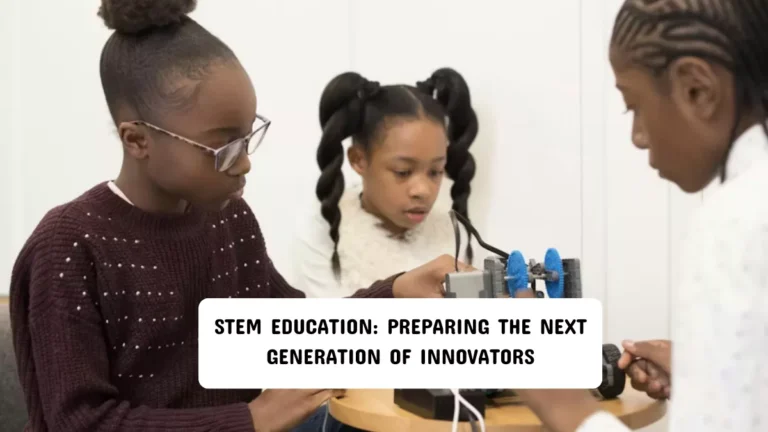
Consider a group of middle school students designing a robotics project. They need to delegate tasks, share feedback, and explain their reasoning to teammates. These experiences help students build social and teamwork skills, which are highly valued in workplaces and community settings.
4. Encourages Self-Reflection and Personal Growth
Experiential learning includes a reflection component, where students consider what they learned and how they can improve. Reflection might involve writing a journal, discussing outcomes with peers, or presenting findings to a class.
This self-assessment helps students recognize their strengths and areas for growth. Over time, reflection fosters resilience, adaptability, and confidence—qualities essential for both academic and personal success.
5. Bridges the Gap Between Theory and Practice
Experiential learning allows students to apply classroom concepts in real-world scenarios. For example, a student studying history might visit a local museum and connect exhibits with historical events discussed in class.
This practical application reinforces learning by making abstract ideas concrete. Students are more likely to remember lessons when they have experienced them firsthand.
Step-by-Step Guide to Implement Experiential Learning
Step 1: Identify Learning Objectives
Start by clarifying what students should achieve. Objectives should be specific, measurable, and relevant. For example, in a biology class, the goal might be to understand local biodiversity or the effects of pollution on ecosystems.
Clear objectives guide the type of experiential activity to plan and ensure the learning aligns with curriculum standards.
Step 2: Choose Appropriate Activities
Select activities that match the learning objectives and students’ age or skill level. Examples include:
- Elementary students: Planting a garden to study plant growth
- High school students: Conducting chemistry experiments in a lab
- College students: Completing internships or community service projects
Activities should be safe, manageable, and engaging.
Step 3: Prepare Students in Advance
Brief students on the activity, its purpose, and expectations. Provide any necessary instructions, materials, or safety guidelines. Preparation reduces confusion and ensures students are ready to participate fully.
For instance, if students are visiting a historical site, provide a short background, assign research questions, and discuss appropriate behavior during the visit.
Step 4: Facilitate the Experience
During the activity, guide students as needed, but allow them to take ownership. Encourage observation, experimentation, and interaction.
For example, if students are conducting a science experiment, avoid giving all answers immediately. Instead, prompt them to hypothesize, test, and analyze results.
Step 5: Encourage Reflection
After the activity, have students reflect on their experiences. Questions might include:
- What did you learn that you couldn’t in a classroom alone?
- What challenges did you face, and how did you overcome them?
- How can you apply this knowledge in the future?
Reflection solidifies understanding and promotes critical thinking.
Step 6: Assess and Provide Feedback
Evaluation should focus on both the process and outcomes. Assess participation, collaboration, problem-solving, and understanding of concepts.
Provide constructive feedback to help students improve while reinforcing the value of hands-on learning. This assessment also informs future experiential learning activities.
Helpful Tips for Successful Experiential Learning
- Start Small: Begin with short, manageable activities before attempting complex projects.
- Align With Curriculum: Ensure activities reinforce learning objectives and standards.
- Encourage Curiosity: Allow students to explore and ask questions.
- Create a Safe Environment: Prioritize safety and accessibility for all students.
- Document the Experience: Have students take notes, photos, or videos to support reflection.
- Include Everyone: Design inclusive activities that accommodate different learning styles and abilities.
Common Mistakes to Avoid
- Overloading Students: Avoid activities that are too complicated or time-consuming for the age group.
- Neglecting Reflection: Reflection is critical; skipping it reduces the learning impact.
- Focusing Only on Fun: Activities should be engaging but still aligned with learning objectives.
- Lack of Preparation: Failing to prepare materials, instructions, or guidance can lead to confusion and frustration.
- Ignoring Feedback: Not providing feedback diminishes growth and motivation.
Realistic Examples in the USA
- High School Science Labs: Students in California study water quality by collecting samples from nearby rivers, learning about pollution firsthand.
- Service-Learning Projects: In New York, students volunteer at local food banks. They connect lessons on social studies and economics with real-world social challenges.
- College Internships: Business students in Chicago intern at small local companies, gaining practical experience in marketing, management, and customer relations.
- Field Trips: History students in Washington, D.C., visit museums and monuments to link classroom lessons with historical events, enhancing retention and understanding.
These examples show how experiential learning can be tailored to different subjects, locations, and student levels.
FAQ
Q1: Is experiential learning only for students in schools?
No. Experiential learning is effective for learners of all ages, including college students, adult learners, and professionals seeking hands-on skills.
Q2: How can parents support experiential learning at home?
Parents can encourage projects, experiments, field trips, and reflective discussions. Simple activities like cooking to understand measurements or visiting local parks for science observations are effective.
Q3: Does experiential learning improve grades?
While grades may improve, the primary benefit is deeper understanding, engagement, and skill development. Improved retention often leads to better academic performance naturally.
Q4: Can experiential learning work in large classrooms?
Yes, with careful planning. Teachers can use group projects, rotations, or station-based activities to ensure hands-on participation for all students.
Q5: How long should experiential learning activities last?
Duration depends on objectives. Some activities may be a single class session, while others, like internships or research projects, may span weeks. The key is adequate time for participation and reflection.
Conclusion: Making Learning Real and Meaningful
Experiential learning transforms education by connecting theory with practice. It actively engages students, develops critical skills, and fosters confidence in their abilities. Whether through internships, field trips, laboratory experiments, or community service, this approach helps learners of all ages see the relevance of their studies in real life.
By following a structured approach—setting clear objectives, choosing appropriate activities, preparing students, facilitating experiences, encouraging reflection, and providing feedback—educators can create meaningful learning experiences. Avoiding common mistakes and incorporating inclusive, practical examples ensures that students benefit fully from this hands-on approach.
For students, parents, and educators across the United States, experiential learning is not just an alternative teaching method—it is a way to make education engaging, practical, and lasting. By embracing this approach, we prepare learners not only for exams but also for the challenges and opportunities they will face beyond the classroom.
✨ You May Also Like ✨