Education has traditionally been confined to four walls, with students seated at desks and teachers leading from the front. But the world beyond those walls holds limitless opportunities for discovery, curiosity, and growth. Learning outside the classroom has emerged as one of the most powerful ways to connect students with real-life experiences that textbooks alone cannot provide. It blends theory with practice, curiosity with context, and knowledge with purpose.
This approach matters now more than ever. In an age dominated by screens and structured schedules, outdoor and experiential learning help students rediscover creativity, collaboration, and confidence. Whether it’s exploring a historical site, conducting a science experiment in nature, or visiting a local business, the benefits go far beyond academics. This article explores why learning outside the classroom is so transformative, how it enhances academic performance, and the life skills it nurtures along the way.
 How Modern Teaching Methods Are Inspiring a New Generation of Learners
What Does Learning Outside the Classroom Mean?
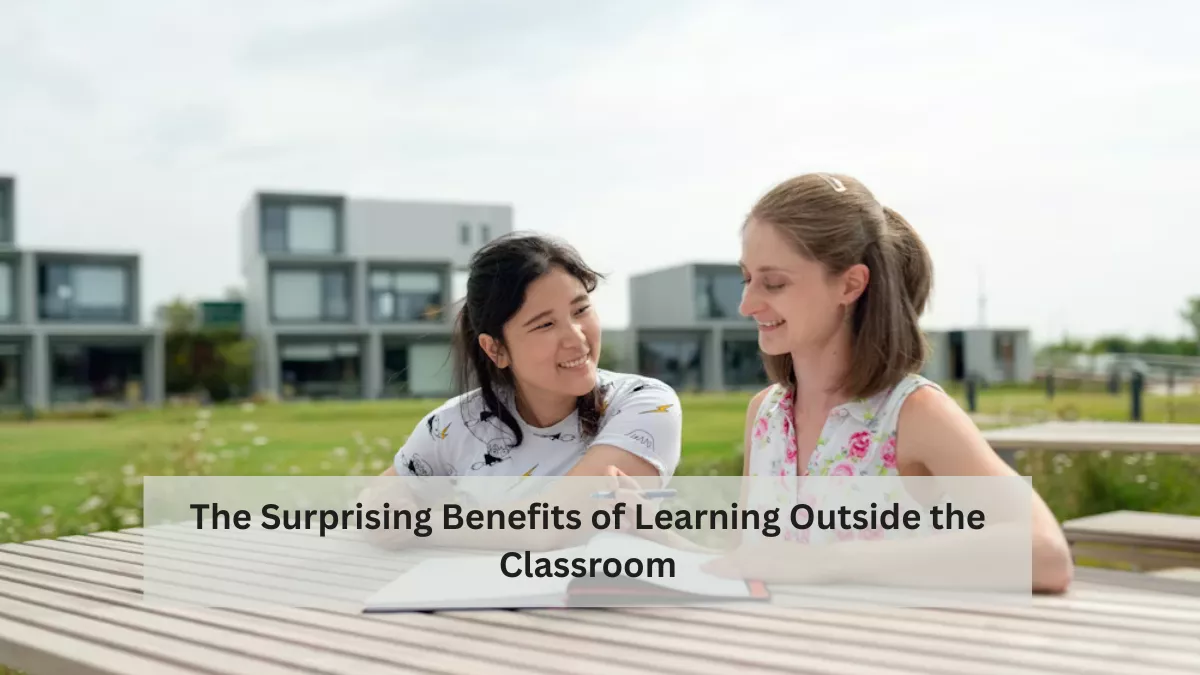
Learning outside the classroom refers to any educational activity that happens beyond traditional school settings. It can include field trips, environmental education, cultural excursions, internships, outdoor learning programs, or even school gardens. Unlike conventional classroom instruction, this method encourages hands-on experiences that allow learners to apply what they’ve studied to real-world situations.
For example, studying plant biology inside a classroom helps build foundational knowledge, but observing plant life in a forest ecosystem deepens understanding. Similarly, learning about history in a textbook can be enlightening, but walking through a preserved ancient site brings history to life. The concept focuses on making education interactive and immersive rather than passive and theoretical.
 How Teachers Are Using Innovation to Transform Classrooms
The Academic Benefits of Experiential Learning
Learning outside the classroom significantly improves academic outcomes by helping students see the relevance of what they learn. When concepts are experienced directly, retention rates increase. Studies have shown that students who participate in field-based learning score higher in science and geography assessments because they remember through experience, not just memorization.
This method also promotes inquiry-based thinking. Instead of simply absorbing facts, students learn to ask questions, form hypotheses, and test ideas in authentic contexts. These experiences develop analytical and problem-solving skills that directly support academic performance. Additionally, hands-on learning increases engagement, particularly among students who struggle with traditional teaching styles. It transforms learning from obligation to curiosity-driven exploration.
 Why Collaborative Learning Is the Future of Education
Building Emotional and Social Intelligence
Beyond grades and test scores, outdoor learning cultivates emotional growth and social skills. Interacting with peers outside the classroom setting fosters teamwork, communication, and empathy. When students collaborate on outdoor projects—such as measuring river pollution or building a school garden—they learn to negotiate, share responsibilities, and support one another.
Moreover, the less formal nature of outdoor learning allows students to express themselves more freely. Without the constraints of a classroom hierarchy, learners often develop self-confidence and leadership abilities. Teachers, too, get to know their students’ strengths and personalities in more authentic settings, creating stronger bonds that translate into better classroom dynamics later on.
 The Secrets to Creating Engaging Lessons That Students Love
Emotional intelligence developed through such interactions is critical in shaping adaptable, resilient individuals—skills that are essential for success in personal and professional life.
Connecting Theory to the Real World
One of the strongest advantages of learning outside the classroom is its ability to connect academic knowledge to everyday life. Students often struggle to see the relevance of abstract concepts, leading to disengagement. However, when they witness how those concepts work in practice, the learning becomes meaningful.
 How Technology Is Making Learning More Fun and Effective
A student studying environmental science may understand climate change better after visiting a local ecosystem affected by pollution. Similarly, business students touring a manufacturing facility can observe economic theories in action. These experiences bridge the gap between knowing and understanding, which is the foundation of applied education.
This relevance also inspires career interests. Exposure to real-world environments helps students envision potential professions and passions they might not have considered before. By understanding how learning translates into life opportunities, motivation naturally increases.
Enhancing Creativity and Critical Thinking
Creativity thrives when learners step into unfamiliar spaces. Outdoor environments stimulate the imagination in ways that structured classrooms rarely can. Nature, in particular, has been linked to improved cognitive flexibility and divergent thinking—essential components of creativity.
When learners face unexpected challenges, such as unpredictable weather during a field study or unplanned results during an experiment, they learn to think critically and adapt. These problem-solving skills cannot be easily replicated within a controlled classroom setting.
Additionally, outdoor learning supports interdisciplinary education. A single activity—like mapping a local forest—can incorporate geography, biology, mathematics, and art, offering a holistic approach to knowledge that encourages innovation and curiosity.
Physical and Mental Health Benefits
Modern education often keeps students seated for hours, limiting physical activity and exposure to nature. Learning outside the classroom naturally promotes movement, exercise, and fresh air—all of which enhance physical health and cognitive performance. Studies indicate that students who spend more time outdoors exhibit improved concentration, better memory, and reduced stress levels.
The mental health benefits are equally significant. Outdoor environments lower anxiety and depression by encouraging mindfulness and social connection. Exposure to sunlight boosts vitamin D levels and regulates mood. Learning in open spaces provides a sense of freedom that fosters emotional balance and enthusiasm.
This combination of mental clarity and physical vitality makes outdoor learning not only educationally effective but also essential for overall well-being.
Developing Life and Career Skills
The world is changing rapidly, and employers increasingly seek adaptable, collaborative, and creative thinkers rather than memorization-based learners. Learning outside the classroom prepares students for this reality by nurturing essential life and career skills.
Practical learning experiences teach time management, decision-making, and accountability. For example, organizing a community clean-up or conducting a field survey requires planning, delegation, and follow-through—skills that directly translate to workplace success.
Outdoor education also strengthens resilience. Real-world learning often involves unpredictability—missed buses, weather changes, or unplanned outcomes—all of which teach students how to stay calm under pressure and find solutions independently. These lessons in adaptability form a foundation for leadership and lifelong learning.
Encouraging Environmental Awareness and Responsibility
When students engage directly with nature, they develop a deeper appreciation for the environment and the need to protect it. Observing ecosystems firsthand creates emotional connections that no textbook can replicate. This connection builds environmental literacy and a sense of stewardship.
Outdoor education encourages sustainable thinking. Activities such as studying local flora and fauna or analyzing waste management systems show students the impact of human behavior on the planet. These experiences often inspire community involvement, advocacy, and responsible decision-making that extend beyond school life.
By integrating environmental learning into education, schools prepare students not only as scholars but as conscious citizens capable of contributing positively to society and the planet.
Overcoming Barriers to Outdoor Learning
While the benefits are clear, some challenges hinder widespread adoption of outdoor learning. Schools often face logistical issues such as transportation, safety concerns, and limited budgets. Additionally, teachers may lack training or confidence in managing outdoor sessions effectively.
However, these barriers can be overcome through careful planning and community support. Schools can start small by using nearby parks or creating outdoor classrooms on campus. Partnerships with local organizations, museums, or environmental groups can provide resources and expertise.
Most importantly, shifting the educational mindset is essential—viewing outdoor learning not as a luxury but as an integral part of quality education. When educators, parents, and policymakers recognize its long-term value, implementation becomes more practical and sustainable.
Practical Ways to Integrate Outdoor Learning
Bringing lessons outside doesn’t always require major excursions. Teachers can begin by conducting simple experiments, reading sessions, or discussions in open-air settings. For science, nature walks can illustrate biodiversity; for mathematics, students can calculate area and distance using outdoor spaces. Art and literature classes can draw inspiration from natural surroundings.
Schools can also design project-based learning opportunities that connect students with their communities. Examples include interviewing local business owners for economics lessons, volunteering for environmental causes, or documenting cultural stories for social studies.
The key is to maintain alignment between outdoor activities and curriculum goals while ensuring safety, accessibility, and inclusivity. With creativity and planning, any subject can benefit from experiential learning.
Conclusion
Learning outside the classroom is more than a supplement—it is a transformative approach to education. It nurtures academic excellence, emotional growth, and lifelong curiosity. Students who experience the world beyond their desks become more engaged, adaptable, and confident. They understand that knowledge is not confined to pages but lives in the experiences, people, and places that surround them.
By integrating outdoor and experiential learning into education systems, schools prepare learners not just for exams but for life itself. The world becomes their classroom, and every experience becomes an opportunity to grow, reflect, and contribute.
Key Takeaways
Learning outside the classroom bridges theory with real-world understanding. It enhances academic performance, builds emotional intelligence, improves health, and fosters lifelong skills. Most importantly, it reconnects education with its true purpose—to inspire discovery, empathy, and growth in every learner.
FAQs
What is learning outside the classroom?
Learning outside the classroom means gaining knowledge through real-world experiences beyond traditional school settings.
How does outdoor learning improve academic performance?
It boosts memory, motivation, and understanding by linking classroom theory to hands-on experiences.
Can outdoor learning support emotional growth?
Yes, it builds teamwork, confidence, and empathy through shared real-world challenges.
Is outdoor learning suitable for all subjects?
Absolutely. Every subject—from science to art—can integrate practical, outdoor experiences effectively.
How can schools start implementing outdoor learning?
Schools can begin small by using local parks, gardens, or community spaces for educational activities.
✨ You May Also Like ✨