Education in the United States has long faced challenges that impact students of all ages. Many traditional schools rely heavily on standardized testing, lecture-based teaching, and rigid schedules, which often fail to engage students or prepare them for real-world problems. Students may struggle to retain knowledge or develop practical skills, while teachers face pressure to meet benchmarks rather than focus on meaningful learning experiences.
The result is a growing gap between what students learn in the classroom and the skills they need to succeed in college, careers, and daily life. This problem is particularly evident in fast-changing fields like technology, science, and creative industries, where adaptability and critical thinking are crucial.
 How Modern Teaching Methods Are Inspiring a New Generation of Learners
Why Traditional Education Often Falls Short
Several factors contribute to the shortcomings of conventional education.
Rigid Curriculum and Standardization
Many schools follow a one-size-fits-all approach, where every student must learn the same material at the same pace. While this can simplify administration, it fails to address individual learning styles or talents. Students who excel quickly may become bored, while those who need extra help may fall behind.
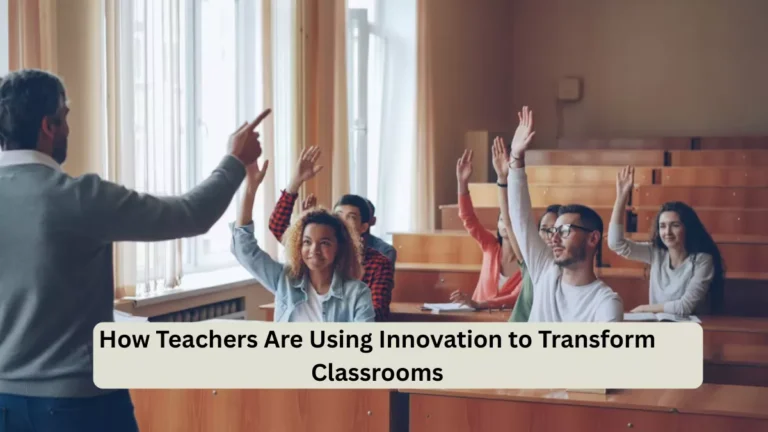
 How Teachers Are Using Innovation to Transform Classrooms
Overemphasis on Testing
Standardized tests are often used as the primary measure of success, but they capture only a small portion of a student’s abilities. Test-focused teaching can limit creativity, problem-solving, and hands-on learning opportunities.
Limited Real-World Application
Traditional classrooms often emphasize memorization over practical skills. Students may know theoretical concepts but struggle to apply them in real-life situations. This gap can leave them unprepared for college projects, internships, or the workforce.
 Why Collaborative Learning Is the Future of Education
Step 1: Embracing Hands-On Learning
Innovative schools across the United States are increasingly adopting hands-on learning to engage students actively.
What It Is
Hands-on learning encourages students to explore concepts through practical activities, experiments, and projects. Instead of only reading about science, for example, students might build simple machines, conduct chemistry experiments, or participate in environmental projects.
 The Secrets to Creating Engaging Lessons That Students Love
Why It Helps
This approach improves retention and fosters curiosity. Students see immediate results from their work, which makes lessons more memorable. It also encourages collaboration and problem-solving, skills essential for college and career success.
How Schools Do It
 How Technology Is Making Learning More Fun and Effective
- Project-based classrooms where students design solutions to real-world problems.
- Makerspaces equipped with 3D printers, robotics kits, and coding tools.
- Field trips and outdoor learning to connect theory with real environments.
Step 2: Integrating Technology Thoughtfully
Technology can enhance learning when used strategically. Many innovative schools are moving beyond basic computer labs to integrate digital tools into everyday lessons.
Benefits of Technology Integration
- Personalized learning through adaptive programs that match each student’s pace.
- Virtual simulations to explore complex concepts without safety risks.
- Online collaboration tools that allow students to work on projects with peers across the country.
Practical Examples
A middle school in California uses coding platforms to teach problem-solving. Students create apps that address community needs, such as a recycling tracker. In another school in Texas, virtual labs allow students to conduct chemical experiments without expensive equipment, making science more accessible to all.
Best Practices
Technology should supplement, not replace, direct teaching. Teachers still guide discussions, encourage critical thinking, and assess comprehension to ensure students gain both digital and analytical skills.
Step 3: Fostering Creative Problem-Solving
Problem-solving is no longer a bonus skill; it is a necessity in modern society. Schools that encourage creativity prepare students to navigate complex challenges.
Approaches Schools Use
- Cross-disciplinary projects that combine art, science, and technology.
- Design thinking workshops where students brainstorm, prototype, and test solutions.
- Real-world partnerships with local businesses or nonprofits to solve community issues.
Why It Matters
Students learn that failure is part of the process. They develop resilience, adaptability, and confidence, which helps in both higher education and future careers. For instance, students who design a sustainable garden for their school learn biology, teamwork, and project management simultaneously.
Step 4: Supporting Social and Emotional Learning
Academic success depends on more than just grades. Emotional intelligence, self-awareness, and communication skills are critical for overall development.
What Schools Are Doing
- Incorporating mindfulness exercises and stress management into daily routines.
- Providing peer mentoring and counseling programs.
- Creating safe spaces where students can express concerns and practice conflict resolution.
Impact
Research shows that students who receive social-emotional support are more engaged in learning and perform better academically. They are better equipped to handle stress, work in teams, and communicate effectively.
Step 5: Encouraging Lifelong Learning and Curiosity
Innovative schools aim to instill a love of learning that goes beyond the classroom.
Strategies
- Personalized learning plans based on interests and strengths.
- Clubs, workshops, and community service opportunities that connect education with passion projects.
- Encouraging reflection and goal-setting to help students take ownership of their education.
Example
A high school in New York City allows students to dedicate one day a week to independent projects. One student may focus on writing a short novel, while another builds a small solar-powered device. Both develop valuable skills and the habit of self-directed learning.
Helpful Tips for Parents and Students
- Visit Schools in Person: Observe classrooms to see if teaching is interactive and student-centered.
- Ask About Project-Based Learning: Check if students are encouraged to explore ideas practically.
- Balance Screen Time: Ensure technology is enhancing, not replacing, meaningful interactions.
- Encourage Curiosity at Home: Support hobbies and interests that develop problem-solving and critical thinking skills.
Common Mistakes to Avoid
- Relying Solely on Test Scores: Don’t judge a school by test scores alone; assess the overall learning experience.
- Ignoring Emotional Learning: Academic skills are important, but social and emotional development is equally critical.
- Overusing Technology: Too much screen time without guidance can reduce engagement and focus.
- Skipping Real-World Connections: Learning disconnected from practical application can limit student readiness for the future.
FAQs
Are innovative schools only in big cities?
No, many innovative programs exist nationwide, including suburban and rural areas. Communities are adapting modern approaches based on local needs.
Do hands-on and project-based schools prepare students for college?
Yes, these schools develop critical thinking, research skills, and independence, all of which are highly valued in higher education.
How can parents support innovative learning at home?
Encourage curiosity, provide materials for projects, and allow children to explore their interests without excessive structure.
What if a student struggles with self-directed learning?
Teachers and mentors in innovative schools provide guidance, scaffolding, and support to ensure students gradually develop independence and confidence.
Are innovative schools more expensive than traditional schools?
Costs vary widely. Many public schools are integrating innovation without raising tuition, while some private or charter schools may have higher fees. Scholarships and community programs can help offset costs.
Conclusion: A Brighter Future for Learning
Education is evolving to meet the needs of a rapidly changing world. Innovative schools in the United States are demonstrating that learning can be engaging, practical, and adaptable. By combining hands-on experiences, thoughtful technology integration, creative problem-solving, and social-emotional support, these schools prepare students not just for tests, but for life.
For students, parents, and educators, the key is to embrace approaches that cultivate curiosity, resilience, and practical skills. With careful planning and consistent support, the transformation of education can benefit everyone, creating a generation of learners ready to face real-world challenges confidently and creatively.
✨ You May Also Like ✨