Many students, professionals, and lifelong learners struggle to stay motivated in traditional learning environments. Long lectures, dense reading materials, and passive learning methods often lead to disengagement. This disengagement can result in incomplete understanding, lower retention, and frustration among learners of all ages. In the U.S., classrooms and online courses alike are facing this problem.
Teachers and course creators are seeking ways to make learning more interactive, engaging, and effective. One solution that has emerged in recent years is gamification—using game mechanics to enhance learning experiences.
 How Modern Teaching Methods Are Inspiring a New Generation of Learners
Why Traditional Learning Struggles
Traditional education often relies on passive methods, such as reading textbooks, listening to lectures, or completing repetitive assignments. While these methods work for some learners, they fail to engage many students who benefit from interactive or hands-on approaches.
Several factors contribute to this problem:
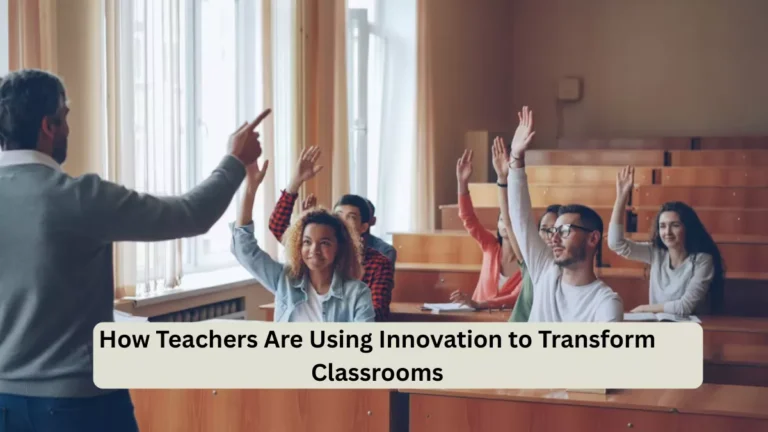
 How Teachers Are Using Innovation to Transform Classrooms
- Lack of Motivation: Learners may not see immediate value in completing tasks, leading to procrastination or disinterest.
- Limited Engagement: Standard lessons do not always capture attention, especially for younger learners or adults balancing busy schedules.
- One-Size-Fits-All Approach: Not all learners absorb information the same way. Visual learners, kinesthetic learners, and those who thrive on feedback may find traditional methods ineffective.
As a result, education can feel like a chore rather than an opportunity for growth. Gamification addresses these issues by adding interactive, goal-oriented, and rewarding elements to the learning process.
What Gamification Means in Education
Gamification in education applies elements commonly found in games—points, levels, challenges, rewards, and progress tracking—to the learning process. It is not about turning every lesson into a video game, but about creating a structured and engaging learning environment that motivates learners to achieve their goals.
 Why Collaborative Learning Is the Future of Education
In practical terms, gamification may include:
- Earning points or badges for completing lessons
- Unlocking new levels or modules after mastering certain skills
- Participating in leaderboards to track progress with peers
- Completing interactive challenges or quizzes for rewards
These features encourage learners to actively participate, reinforce positive behaviors, and provide a sense of accomplishment.
 The Secrets to Creating Engaging Lessons That Students Love
Step 1: Setting Clear Learning Goals
Gamification works best when learners understand what they are aiming to achieve. Clear goals give context to points, badges, or progress bars.
Example: In a U.S. high school history class, a teacher could divide a semester into modules, such as “American Revolution” or “Civil Rights Movement.” Students earn points for completing reading assignments, quizzes, and group projects. Tracking progress toward module completion provides motivation and helps learners see tangible results.
 How Technology Is Making Learning More Fun and Effective
Practical Tip: Start small by setting weekly or monthly goals. Ensure they are measurable and realistic, which keeps learners motivated without causing burnout.
Step 2: Incorporating Points and Rewards
Points are a simple yet effective way to encourage participation. They give learners immediate feedback and reinforce positive behaviors.
Example: Online language platforms often award points for completing daily lessons. Over time, learners can see their points accumulate, creating a sense of progress and accomplishment.
Common Mistake to Avoid: Do not make rewards purely about competition. Points should reflect personal growth and skill development, not just outperforming others.
Step 3: Using Levels and Progression
Progression systems allow learners to see how far they’ve come and what is ahead. Levels can provide structure and help learners set achievable milestones.
Example: In a U.S. college math course, students might progress from “Beginner Algebra” to “Advanced Calculus” levels. Unlocking higher levels requires mastering previous concepts, creating a natural learning path.
Helpful Tip: Use clear visual indicators, like progress bars or checklists, to show advancement. This enhances motivation and keeps learners engaged.
Step 4: Adding Interactive Challenges
Challenges and problem-solving tasks promote active learning. They encourage learners to apply concepts rather than just memorize them.
Example: In a coding bootcamp, learners could complete timed challenges where they solve real-world programming problems. Points or badges are awarded for completion, accuracy, and creativity.
Practical Tip: Ensure challenges are challenging but achievable. Frustratingly difficult tasks can discourage learners instead of motivating them.
Step 5: Implementing Leaderboards Wisely
Leaderboards can inspire friendly competition but must be used thoughtfully to avoid discouraging slower learners.
Example: A U.S. elementary school science class might display a leaderboard for participation in virtual experiments. To prevent negative effects, the leaderboard could highlight personal progress or improvements rather than absolute ranking.
Common Mistake to Avoid: Avoid making leaderboards the only source of motivation. Not all learners respond well to competition, so combine leaderboards with personal milestones and rewards.
Step 6: Providing Immediate Feedback
Feedback is critical in gamified learning. Instant responses help learners correct mistakes, reinforce knowledge, and stay motivated.
Example: Digital platforms often give instant feedback after quizzes. For instance, a history app might explain why a chosen answer was incorrect and offer hints for improvement.
Helpful Tip: Keep feedback constructive and encouraging. Focus on learning opportunities rather than penalties for errors.
Step 7: Encouraging Collaboration
Games often include teamwork and collaboration, which can also enhance learning. Collaborative activities teach communication skills and allow learners to help each other.
Example: In a U.S. university environmental studies class, groups could complete gamified projects tracking local sustainability efforts. Points are awarded for team success, not just individual performance.
Practical Tip: Use group challenges to foster cooperation, but ensure individual accountability is still tracked.
Step 8: Monitoring Progress and Adjusting
Regular assessment of gamified learning methods is crucial. Tracking engagement, completion rates, and learner satisfaction helps educators make improvements.
Example: A high school teacher might analyze quiz scores, participation data, and student feedback to adjust point systems, challenges, or rewards for better results.
Helpful Tip: Be flexible. Gamification should evolve with learners’ needs, ensuring it remains engaging and effective.
Common Mistakes to Avoid
- Overcomplicating Systems: Simple point and badge systems are often more effective than overly complex game mechanics.
- Neglecting Learning Objectives: Gamification should enhance learning, not distract from it. Always tie rewards and challenges to educational goals.
- Ignoring Different Learning Styles: Not every learner responds to gamification in the same way. Mix strategies to accommodate diverse learners.
- Focusing Only on Competition: Competition can motivate some, but others may feel discouraged. Include personal milestones and collaborative tasks.
FAQs
Is gamification only for younger learners?
No. Gamification can benefit learners of all ages, including college students, adult learners, and professionals in continuing education programs.
Can gamification improve retention?
Yes. Active participation, immediate feedback, and engaging challenges help learners retain information longer than passive study methods.
Do I need technology to gamify learning?
Not necessarily. While apps and online platforms are helpful, gamification can be applied in traditional classrooms through points, badges, or interactive activities.
How do I measure the success of gamification?
Track engagement, completion rates, knowledge retention, and learner satisfaction. Adjust strategies based on results to ensure effectiveness.
Can gamification replace traditional teaching methods?
No. Gamification is a supplement, not a replacement. It works best alongside well-structured lessons and traditional teaching practices.
Conclusion: The Future of Learning
Gamification is transforming education in the United States by addressing common problems like low engagement, lack of motivation, and passive learning. By using points, levels, challenges, and feedback, learners are encouraged to actively participate, track their progress, and achieve educational goals. Teachers and educators can implement gamification thoughtfully, tailoring strategies to different learning styles and providing meaningful rewards. When applied effectively, gamification enhances both enjoyment and knowledge retention, making education more interactive, rewarding, and accessible for learners of all ages.
Whether you are a student, professional, or lifelong learner, gamification offers a practical approach to making education more engaging and effective. The key is starting small, setting clear goals, and gradually introducing gamified elements that motivate learners without overwhelming them. In today’s fast-paced world, gamification is not just a trend—it’s a valuable tool that redefines the way we learn.
✨ You May Also Like ✨